Education
- BA, Political Science, Spelman College
- MS, International Affairs, Georgia Institute of Technology

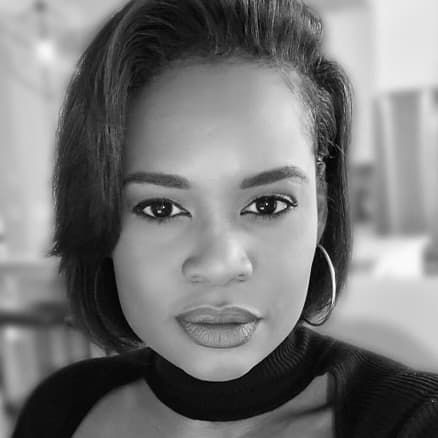
Kali Caldwell,
Co-Founder, Georgia Born Entertainment
July 13, 2023
How did you choose this path?
I can truly say that my path chose me. I started my career as an Intelligence Analyst at the CIA, but still made room for creative and entrepreneurial interests with social impact outside of my work in national security.
In college I met a kindred spirit and Hampton University Alum while studying abroad in Tokyo. We shared a natural curiosity about the world and would talk about issues in our community and how felt a sense of responsibility because of our privilege to be able to travel and explore. This ethos invaded every opportunity I sought as I evolved professionally, and still does today. We kept tabs on our academic and professional journeys, and still have a running debriefing of ideas, current events, lessons, and challenges that continues to this day.
In 2012, as I was on my way to the airport to West Africa for a month-long counterterrorism assignment, I stopped at the post office and overnighted the first investment check for his company, Mayvenn, Silicon Valley's first venture-backed Black-owned hair extension company. Mayvenn wasn't just about money, it was about putting dollars into the hands of black hairstylists for the hair extensions they would send clients to beauty supply stores to buy. It made stylists distributors, with their own online stores without holding inventory or managing customer service. This investment led me to other opportunities to invest in tech that had social impact.
Meanwhile, I'd become the CIA's first African American Spokeswoman, managing the Agency's brand with the media and Hollywood. While in that role, I met the co-writer of one of the highest-grossing romantic comedies of all time, an incredible story architect. He could see I was a natural storyteller so we instantly bonded, and he would go on to help my colleague and I hone our scriptwriting craft for years just as a hobby. I had no idea that this successful screenwriter and I would later start a production company together during a pandemic, which led to me selling my first Original Series to Amazon last year.
After retiring from government service, while I was doing corporate crisis communications work, a DC attorney friend and I teamed up on the side to manage a few high profile crisis cases pro bono for Black families who found their children in a media storm, and this was the birth of our own Crisis Communications practice.
What are some challenges that you had to overcome?
As the only African American student in every class, every year of high school at my private Christian school in Georgia, it was tough standing out, and standing alone. I failed miserably at trying to fit in and struggled silently with social anxiety. When I realized that it was impossible to experience the world as my peers, I rebelliously tested what would happen if I actually owned my space, my voice, and my achievement. What I realized at such a young age was lifechanging-- the respect I earned from my peers was more important than their friendship. I empowered myself to compete with them, push back on ideas, and even challenge and change perceptions by just being who I authentically was. I left high school with a confidence that I didn't even realize I had gained, but it allowed me the freedom to chart my own course and set aside the expectations of others.
Do you have any advice for other Black Women in STEM?
Accept yourself. Then, go out of your way to cultivate relationships and experiences outside of your comfort zone. Push yourself to play in different arenas as an equal and not a spectator. Engage your talents and be honest about what brings you fulfillment. Explore opportunities, even if they don't fit a path or plan. Practice agility and adventure. The uniqueness of your experiences and your ability to adapt is what makes you valuable.
Being a Black woman in STEM...
Don't let anyone, even yourself, put you in a box.