Education
- BA, African and African American Studies, Stanford University
- MDiv, Union Theological Seminary in the city of New York MS, Information Science, University of Colorado Boulder

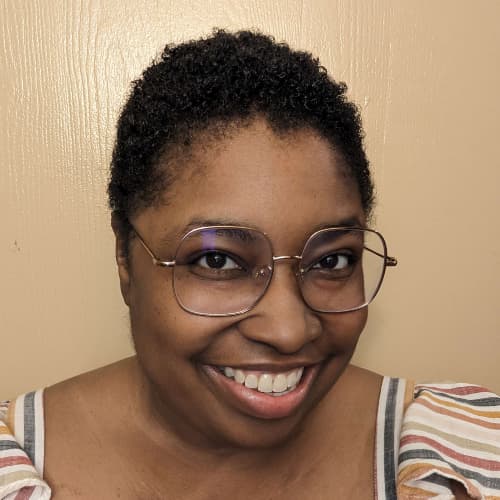
Shamika Klassen, MDiv, M.S.
Ph.D. Candidate in Information Science, UC Boulder
July 13, 2023
How did you choose this path?
I first learned about what a Ph. D. was in the seventh grade and decided then and there that I wanted to get one. Information Science found me. When it came time to apply for programs, I wanted to study technology, ethics, and social justice issues. However, I did not think a Computer Science department could help me hone my ethics and social justice acumen. And, conversely, a religious studies, philosophy, African and African American Studies, or similar department might not have the technology prowess. A friend and professor, Dr. Nathan Schneider, at CU Boulder shared information about the iSchool (Information Science department) they have and I applied.
I want to use my skills and platform as a researcher centering and elevating the voices and experiences of marginalized people in the design and development of technology.
What are some challenges that you had to overcome?
While in seminary, I developed the concept of technowomanism based on the liberation theology of womanism. Defined by Alice Walker, a womanist is foremost a Black feminist or feminist of color. This term, further developed by Black women theologians from the 80s onward, inspired me to use it as an ethical framework for addressing social justice issues with technology.
In my doctoral program, my advisor Dr. Casey Fiesler was not initially familiar with womanism and at one point suggested I may need to find a different advisor who could help me further develop the framework. Instead of abandoning my scholarship to stay with my advisor, or deserting my advisor and lab to start over with a different advisor in a different department (or possibly school), I found a way to focus on my concept with committee members like Drs. Xeturah Woodley and Christina Harrington while continuing to develop my overall Information Science scholarship with my advisor.
I achieved this by using opportunities to collaborate with my committee members, seek out their feedback and mentorship, and broaden my doctoral team outside of my department and institution in order to find the support I and my academic research needed.
Do you have any advice for other Black Women in STEM?
It truly takes a village of reciprocity to succeed. Peer mentors, advisors, sponsors, cheerleaders, people who can bring you a meal or visit you when you are sick, and so much more. Building mutually beneficial relationships is crucial to your success and to lifting as you climb. Do not wait until you are in need to find your people. Cultivate those relationships as you go. If you stay ready, you don't have to get ready and when it comes to your community, that is all the more true.
Being a Black woman in STEM...
means unapologetically following your professional passions regardless.